
TRANSCRIPT:
(This transcript is derived from an automated process. The video recording is authoritative.)
Dr Jillian Spencer:
I've spent the last three years asking people the same question in various ways. I've worked up to it slowly in conversation and asked it gently. I've put it to people bluntly in an exasperated tone and I've even said it dramatically through tears. The question is, how do people know? How do people know that it isn't safe to speak up?
I guess what I'm getting at is, how come I didn't know? How did every single one of my colleagues in that hospital know that it was too dangerous to raise concerns about a harmful model of care called the gender affirmation model, which involves affirming the claimed gender identities of children, troubled and traumatised children, and giving them puberty blockers, cross-sex hormones, and eventually surgeries to resemble the opposite sex.
To be frank, the gender-affirming approach is obviously absurd, and it is entirely predictable to anyone with a basic understanding of physiology or a developmental psychology that these interventions will cause serious harms, such as infertility, lack of sexual function, long-term physical health problems, and the risk of regret.
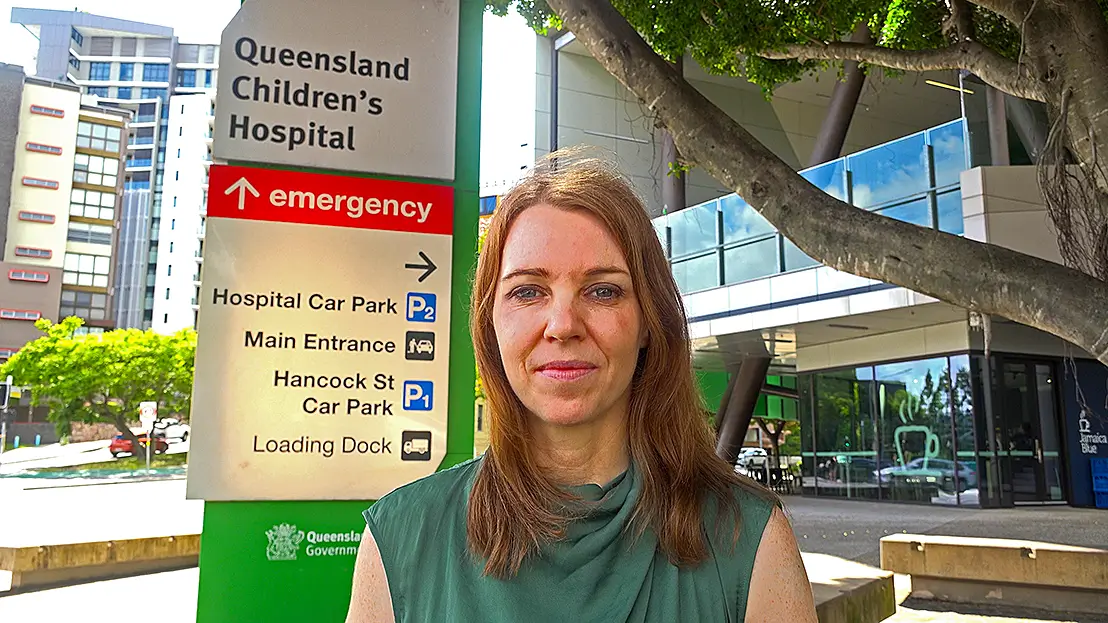
This obviously harmful clinical approach was rolled out in the hospital right beneath our noses. It's very hard to get an answer to the question of, how do people know not to speak up? Because everyone that I speak to, down to a man, appears to genuinely believe that they would speak up if they are in a situation of working in an organisation where they saw harm being done to children. And from movies and books, I know that we want a culture where we prioritise others and take personal risks to do the right thing.
We want to work together to protect each other and to protect children. It feels good when we trust that people will do that and when we see people doing that. However, if my experience is a stress test to determine how far we've progressed towards achieving that culture, I'm here to report that the results have been a disaster.
There are six gender clinics across Australia, five of which are co-located with a state tertiary children's hospital. In terms of accountability, it is the paediatricians and psychiatrists in the hospitals who are responsible for the clinical governance. So I would estimate that we continue to have at least 500 or more clever, well-educated, and comparatively financially well-off medical professionals who have been keeping quiet about a medical scandal occurring in their workplace for at least five years now. And it's really confusing to me that all these people are keeping quiet.
They know the Hippocratic Oath "First do no harm." Also, they are working in hospital environments, which are saturated with messages about clinician integrity and patient safety. There are vision statements about providing safe and effective evidence-based care. Their job description includes their responsibility to ensure this. There is mandatory training about speaking up for safety. How do these 500 or more people know that this is all in fact a make-believe world, a land of pretend created by the hospital marketing department?
Over the course of 2022, I tried to repeatedly raise concerns about the gender affirmation model internally. I had meetings with my bosses. I gave educational presentations. I sent educational material to my colleagues. I asked difficult questions in meetings. I honestly thought my bosses and colleagues would want to know about this patient harm.
In response to my repeated efforts to raise concerns, the hospital executive gave me a lawful direction that said I needed to affirm the claimed identities of children. They said I needed to comply with a document created by the hospital in 2021 called a work instruction for the management of gender dysphoria. This document outlined the gender-affirming approach. What I now know, which I didn't know at the time, is that a work instruction document is not the same as a clinical guideline. Clinical guidelines can only be created by Queensland Health centrally, and Queensland Health has no guideline for the management of gender dysphoria.
This dodgy work instruction created by the hospital that they kept using to smack me on the nose actually had no authority to direct my clinical practise. They never had the capacity to mandate an affirming clinical approach to children upon me to deliver. They pretended they did. In the hospital in 2022 and 2023, there was a lot of inappropriate workplace behaviour towards me. Staff from the gender clinic and their allies complained to their boss that they didn't feel safe around me.
They reported that they felt incredibly distressed when hearing me use children's biological pronouns. These people claiming distress from hearing words were seasoned mental health clinicians used to assessing children who'd been through horrific life experiences. I was called transphobic. My managers leaked information about the early disciplinary measures being taken against me for not wanting to use the preferred pronouns of children.
This was a powerful manoeuvre to make sure my colleagues were too scared to show support for me or echo my concerns. It was, "Shut up or you'll be next."
We're meant to have systems within public organisations to protect people who speak up about dangers. The Queensland Public Interest Disclosure Act, which was developed after the Fitzgerald inquiry to try to support whistleblowers in the public service has so far unfortunately not prevented the hospital from taking reprisals against me. I blew the whistle in mid 2022 in two meetings with my bosses, where I disclosed my concerns about the harm to children and a culture in the hospital of cheerleading troubled and confused children to identify as trans.
Unfortunately, with the whistleblower process, it's the hospital itself that decides on what counts as a public interest disclosure. In my case, the hospital found that what I said didn't qualify because they said the dangers I described weren't serious or specific enough.
So the hospital decided that the long-term harms to children that I had outlined, namely infertility, lack of sexual function, physical health problems, and the risk of regret weren't sufficiently serious or specific. And two internal appeals of this decision, of course, reached the same dodgy conclusion. So we've appealed to the Queensland Industrial Relations Commission and next month, it'll be two years that I've been waiting for that decision.
All of the allegations against me in the hospital, all of the allegations against me that the hospital says are substantiated relate to me speaking in the media about the harms to children from gender interventions. They say that I breached the code of conduct because I disparaged Children's Health Queensland services and criticised their staff.
Even when I spoke generally about gender clinics and about gender doctors, they say that that still breached the code of conduct because it may have included Children's Health Queensland doctors and it may have included the Children's Health Queensland Gender Clinic. But how can someone speak up about this serious medical scandal without using the words gender clinic or referring to the people working in the gender clinic? The hospital has doggedly pursued disciplinary processes against me with four separate show cause notices. In September 2025, they tried to fire me, sending me a termination notice.
It is my lawyers who have delayed that by seeking a Supreme Court judicial review. So far, nothing seems to have deterred the hospital from trying to punish me for speaking up.
Let me read to you what Children's Health Queensland says on its website about whistleblowers. "We encourage anyone who believes they've witnessed wrongdoing to come forward and make a disclosure. We have an obligation to deal with wrongdoing, and we want staff to feel confident and comfortable making a disclosure. We believe staff who come forward with disclosures of wrongdoing are acting as exemplary organisational citizens by assisting us in promoting openness, accountability, and good management." So I ask again, how do people know that that is not true?
Recently, the Queensland Crime and Corruption Commission concluded that sending me the termination notice may amount to conduct as defined by the Crime and Corruption Act 2001. This is because if you disclose a danger in the workplace and your employer doesn't act on it within six months, you have the right to speak to the media about it. I want to jump forward now to 2026 to what is the very worst turn of events in this unfolding story so far.
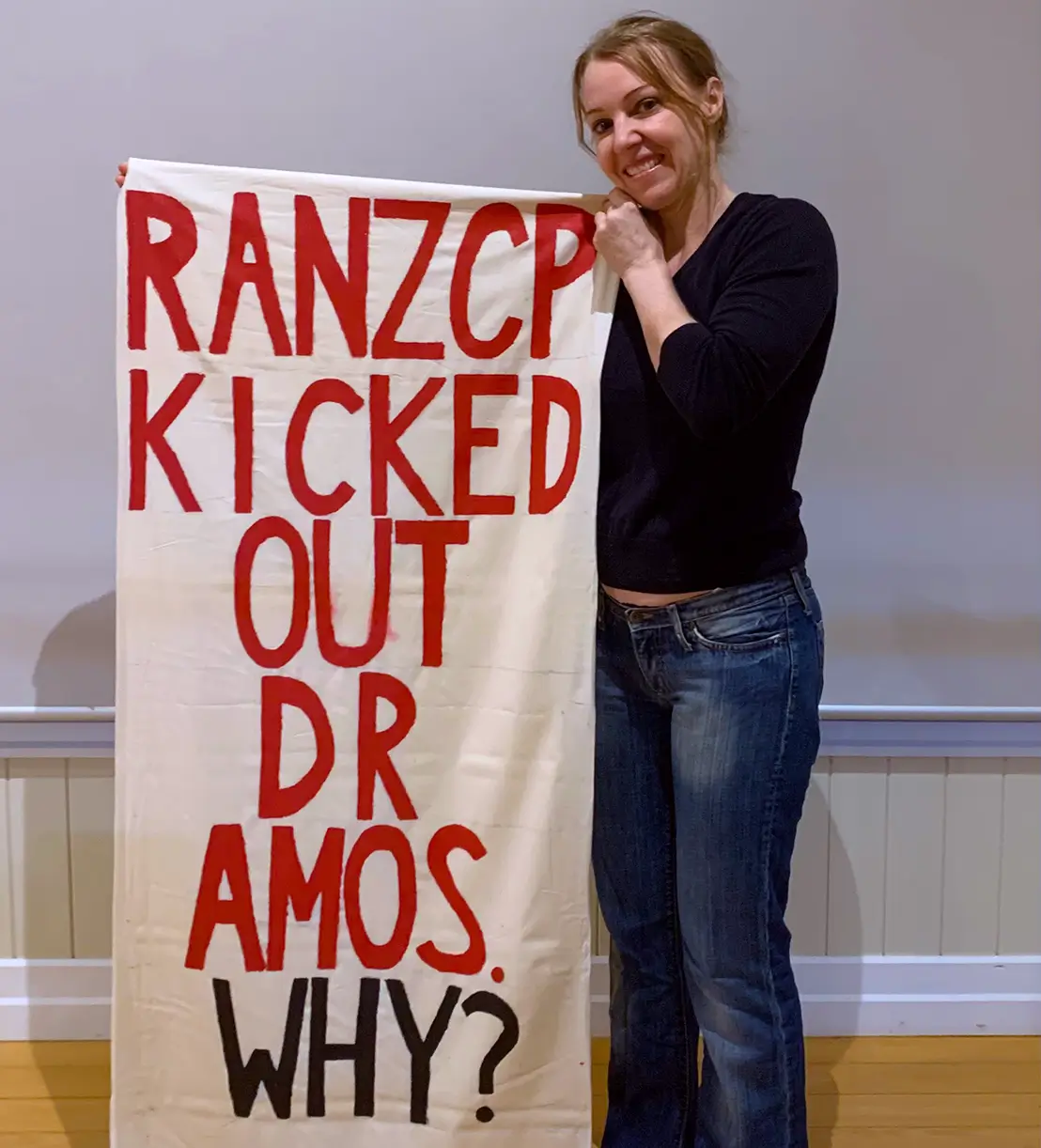
In February, my psychiatrist colleague, Dr. Andrew Amos, had restrictions placed on his medical registration, such that he is no longer able to have direct or indirect contact with patients, and he is banned from posting on social media about gender. These restrictions were imposed for three social media posts, three sentences, raising concerns about gender ideology and gender medicine. They have essentially stopped him working as a psychiatrist for these three sentences.
Starting with studying medicine, it takes about 12 years to qualify as a psychiatrist. So the medical registration body, AHPRA, beat him to the ground with these harsh restrictions, and then the College of Psychiatry has come in for the head stomp. They have now kicked him out of the Royal Australian and New Zealand College of Psychiatrists. This is too much. They are making the cost of speaking out to protect children so high that no health professional will ever do it again.
When I was stood down in the Queensland Children's Hospital in April 2023, I knew that the vast majority of my colleagues agreed with my serious concerns. However, as I've said, they all knew that it wasn't safe to speak up. Sorry. There was only one psychiatrist who was willing to publicly support me and to let the public know that my concerns were legitimate and that was Dr. Andrew Amos.
He did not do this out of personal loyalty to me. We barely knew each other. He lives in Townsville and I live in Brisbane, but he did it because he could see that this is a medical scandal harming children and he had the integrity, the bravery, and the academic ability to be able to help. So he is the sort of person that we want to valorize in our culture because where I didn't know, he did not know, he knew it was too dangerous to speak up and he did it anyway.
So Dr. Amos is an academic psychiatrist and he has published about a hundred journal articles on various academic topics. In mid 2023, he saw in the media what had happened to me and he figured out how he could constructively contribute to the debate. He decided to publish in the area and use that as a platform to engage further on the topic in both professional and public forums. His first article was an analysis of the scant information that we were able to obtain from freedom of information requests from the gender clinics about the numbers of children attending and the number of children being put on hormonal intervention. Sorry. I'll pull myself together.
So he subsequently wrote articles criticising the validity of the gender-affirming care model. He wrote about the CAS review. He wrote about the Sham External Queensland Gender Clinic Review and about the College of Psychiatry's inadequate response to this scandal. He hasn't held back in his criticism of the authorities responsible for continuing the harm. And I just don't think anyone could be as academically ferocious as Dr. Andrew Amos. So I call for the restrictions on Dr. Amos's medical registration to be urgently lifted and for him to be recognised for his bravery, integrity and academic excellence and his college membership should be restored with an apology for everyone.
I also call for AHPRA to leave the LGBTIQA+ programmes that they have signed up to, including the rainbow tick scheme and ACON's Australian Workplace Equality Index. These programmes mean that they are embedding LGBTIQA+ ideology at all levels of their organisation. Thank you. Thank you.
And AHPRA has admitted that these alliances are influencing the way that they regulate health practitioners. It makes AHPRA biased against those of us speaking up about these harms to children. I am so sick of living in fear of losing my medical registration.
I believe that gender-affirming care is not actually a form of healthcare. It is a political movement masquerading as healthcare. The mask of healthcare was used to avoid public scrutiny as it gives it the air of medical expertise. However, there is no medical expertise or medical ethics guiding the gender affirmation model. We've had 25 years of poor quality biased research from the gender clinics.
Just recently, we've had the first high quality study. The study looked at all of the people aged under 23 who attended Finnish gender clinics between 1996 and 2019. This was over 2,000 people. They assessed rates of engagement with specialist mental health services, which in Finland, like in Australia, is a marker for serious mental health problems.
Among males before gender treatment, 10% required specialist mental health services. Then two years after gender treatment, 60% required specialist mental health services. For women, the rate beforehand was 20%, and after two years of gender-affirming interventions, it was 54%. That means that for both sexes, gender-affirming care causes a massive rise in serious mental health problems.
So we now have evidence that these interventions harm mental health. We know these interventions cause infertility, lack of sexual function, and physical health problems. There is the risk of regret. What more do we need to know?
These interventions should be banned, but the political movement just ploughs on regardless. We all know that adolescence is a time of identity exploration and that no permanent decisions should be made. What guides the gender activists is a political goal to change society, to make society less cisheteronormative. Every child transitioned contributes to that goal.
If it was a form of healthcare, the Finnish study and the multiple well-conducted systematic reviews showing the lack of evidence of benefit and the serious harms would have stopped it, but they haven't. Transitioning children has become the policy of left-wing governments across the world. Organisations receiving or seeking government funding fall in line. There is relentless social pressure in the workplace to demonstrate you will comply. Are you wearing the rainbow lanyard? Do you have pronouns in your email signature block? Are you using preferred pronouns? Anyone not complying is easily able to be identified and either bullied into compliance or exited from the workplace.
There's no other health conditions that require flags, badges, and special language in the workplace. I believe that there's a shared value in the Australian community that children are to be protected from making decisions that lead to irreversible, serious changes to the body. This political movement has placed enormous pressure on parents to agree to damaging gender interventions on the false premise that they prevent suicide.
I believe that what parents want is for normal identity adolescent development and exploration to be made as safe as possible by putting these gender interventions out of reach of adolescents. Unfortunately, this political movement is rife in schools. The introduction of the national curriculum by the Rudd/Gillard government in 2010 appeared to be an effort to ensure consistency across Australia in what children are being taught. It held the promise of ensuring that no child would be left behind educationally, regardless of where they lived.
However, unfortunately, the national curriculum has allowed for the rollout of political concepts in schools, which are taught to children as if they are the truth. And children are taught that people who disagree with various political concepts are racist or homophobic or transphobic or misogynistic, etcetera.
In my opinion, children are specifically taught these words in the curriculum so that they can be used as verbal weapons to shut down any discussion of ideas, to stop them to being able to think through the ideas and consider if they agree or disagree and why. These words attack the character of the person who disagrees, which is very hard to defend. It is almost impossible to defend against an attack on your character. How do you prove your motives are good? So it makes it too frightening for a student to speak up if they disagree. This is especially as children and teenagers are particularly aware of their social status and fearful of social rejection.
They don't want to be labelled as a racist or transphobe, etcetera. And also further to aiding and shutting down discussion of these political concepts, there is a social and emotional curriculum which focuses on teaching children to be preoccupied with their own feelings and to view anything that they said that they disagree with as not respectful.
Words are considered violence. Students are encouraged to view themselves as the victim if they feel uncomfortable with being disagreed with. So children are encouraged to be highly sensitive and then to attack the character of the people they disagree with, accusing them of being an awful person rather than sticking with discussion of the political concept itself.
So children are being taught that it isn't safe to speak up. The Respectful Relationships curriculum starts from year one in primary school and teaches children that they might be born in the wrong body, so they might be trans or that some children may be neither male nor female and are called non-binary. It teaches children that it is wrong to deadname or misgender someone, and it promotes the idea that these children should be able to use opposite sex facilities and be in the opposite sex sports category. And of course, it teaches children about transphobia because that is a word that they can use as a weapon, a character attack to silence any child who questions these ideas. Parents who don't agree with transitioning their child are labelled as bigots and teachers promoting these ideas and affirming children see themselves as the child's saviour. These are the same political ideas that were forced on me in the hospital.
They are being enforced on children in school and on working and on people working in various institutions around Australia. These are dangerous ideas. We will have to take risks and work together to protect each other and to protect children. You know, and now I know that it is not safe to speak up, but still we must. Thank you.